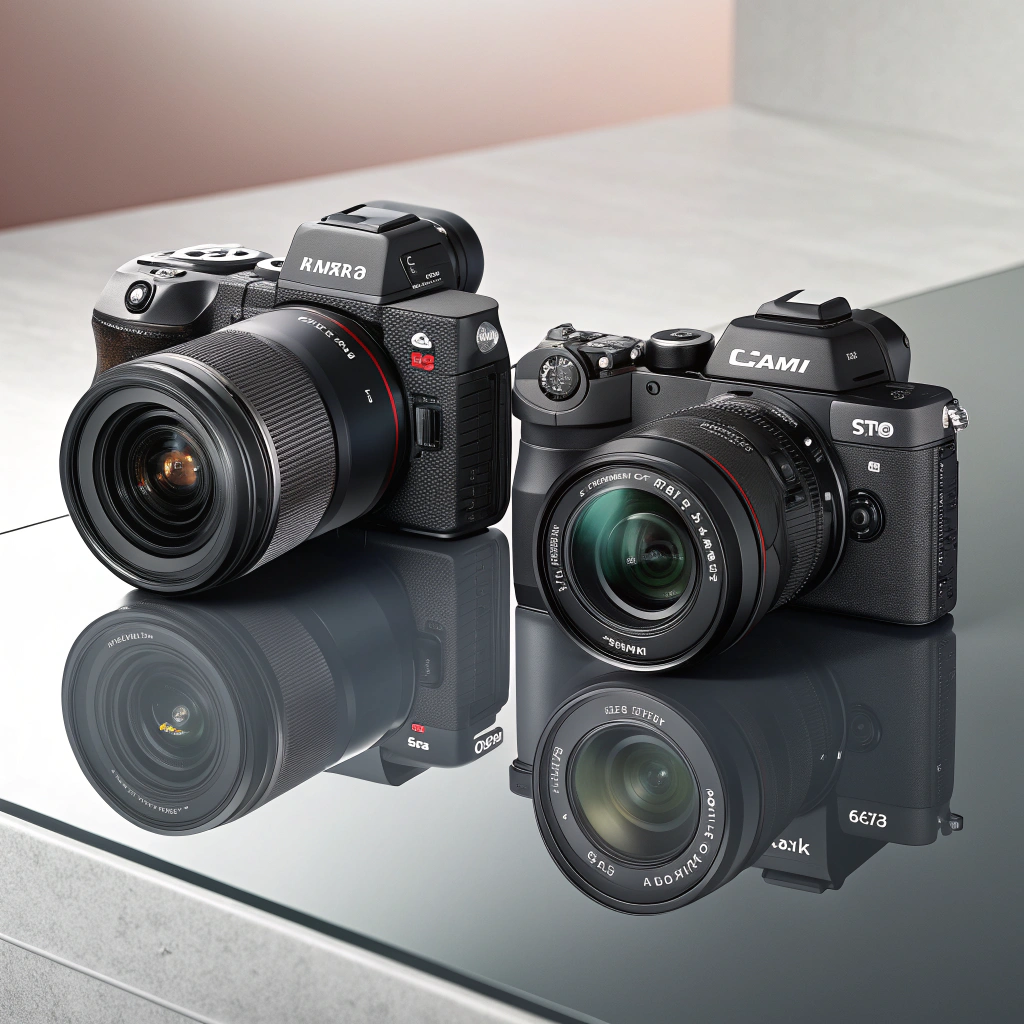

Sony A7 IV vs Canon EOS R6: Ultimate Mirrorless Camera Comparison –
Choosing the right full-frame mirrorless camera can be challenging. In this detailed comparison, we explore sensor performance, autofocus, video capabilities, image stabilization, lens options, battery life, and handling to help photographers and videographers decide which camera suits their needs best.
1. Sensor & Image Quality
Sony A7 IV:
33MP full-frame Exmor R BSI CMOS sensor.
Ideal for high-resolution photography—perfect for landscapes, studio portraits, and large prints.
Back-illuminated sensor improves low-light performance.
ISO range: 100–51200 (expandable to 50–204800). Noise remains low at high ISOs.
Canon EOS R6:
20MP full-frame CMOS sensor.
Optimized for speed and low-light performance.
ISO range: 100–102400 (expandable to 50–204800), excellent for night photography and events.
Insight: For ultra-detailed, high-resolution stills, Sony A7 IV is superior. For action or low-light photography, Canon EOS R6 is ideal.2. Autofocus & Tracking – Sony A7 IV vs Canon EOS R6
Autofocus performance is one of the most important factors for photographers in 2025, whether you are capturing portraits, wildlife, sports, or fast-moving action. Both the Sony A7 IV and Canon EOS R6 offer advanced autofocus systems, but each has unique strengths designed for different types of photography. Understanding these features can help you choose the right camera for your needs.
Sony A7 IV
759 phase-detection points + 425 contrast-detection points cover a wide area of the frame, providing highly accurate autofocus even when your subject is off-center.
Real-time Eye AF for humans and animals ensures that eyes are always sharply focused, which is particularly useful for portrait photography, pet photography, and wildlife photography. This feature allows photographers to capture expressive and professional-looking images effortlessly.
Object Tracking AI automatically tracks moving subjects, keeping them in focus even if they change speed or direction. This is ideal for street photography, active outdoor shoots, and casual sports photography.
Low-light performance is excellent, maintaining focus accuracy even in challenging lighting conditions.
Canon EOS R6
Dual Pixel CMOS AF II with 1053 autofocus points provides wide coverage across the frame and ensures precise and fast focus acquisition.
Advanced subject tracking works well in low-light environments and during fast-action scenarios, making it suitable for sports, events, and wildlife photography.
Eye, face, and head detection allows the camera to intelligently identify and prioritize human subjects, providing sharp focus in portrait sessions or group photos.
Fast AF response ensures that even quick movements are captured accurately, reducing the risk of missed shots.
Benefits & Practical Tips
Sony A7 IV is particularly suited for photographers who prioritize portrait, pet, or wildlife photography, as its Real-time Eye AF ensures crisp, professional results.
Canon EOS R6 is ideal for sports and event photography where speed and reliable subject tracking are critical. Its low-light performance and rapid autofocus make it excellent for capturing dynamic moments.
Both cameras offer advanced tracking capabilities, but your choice depends on whether you need precision for static subjects or speed for moving subjects.
Experiment with autofocus modes: Continuous AF (AF-C) for moving subjects and Single AF (AF-S) for still subjects to maximize performance.
Final Thoughts
Choosing between the Sony A7 IV and Canon EOS R6 largely comes down to your photography style. If sharp, detailed portraits and wildlife shots are your priority, the Sony A7 IV is unmatched. For capturing high-speed sports, events, or any fast-action scenarios, the Canon EOS R6 offers superior tracking and speed. Understanding the autofocus and tracking features of each camera ensures you get the best results in every shooting situation.
3. Video Capabilities
Sony A7 IV:
4K up to 60fps, 10-bit 4:2:2 internal recording, S-Cinetone color profile.
Full pixel readout at 4K 30fps; slight crop at 60fps.
HDMI output for external recording.
Canon EOS R6:
4K up to 60fps, 10-bit 4:2:2 via HDMI, 8-bit internal. Slight crop at 60fps.
Canon’s color science delivers natural tones.
Dual Pixel autofocus ensures smooth focus transitions during video.
Tip: Sony A7 IV is ideal for cinematic video; Canon EOS R6 is better for fast-paced, run-and-gun content creation.
4. Burst Shooting & Continuous Performance
Sony A7 IV:
Up to 10 fps with AF/AE tracking.
Great for wildlife and moderate action photography.
Canon EOS R6:
20 fps electronic shutter, 12 fps mechanical shutter.
Perfect for sports, wildlife, and action-packed events.
Insight: Canon excels in speed; Sony balances speed with resolution and image detail.
5. Image Stabilization (IBIS)
Sony A7 IV:
5-axis in-body image stabilization, up to 5.5 stops.
Works with any lens; reduces handheld shake.
Canon EOS R6:
5-axis IBIS, up to 8 stops with compatible RF lenses.
Excellent for low-light handheld shots and long exposures.
Tip: Canon’s IBIS has a slight edge when paired with RF lenses.
6. Lens Ecosystem & Compatibility
Sony A7 IV:
E-mount lenses, wide range from budget to premium.
Third-party support: Sigma, Tamron, Zeiss.
Compatible with older A7 lenses via adapters.
Canon EOS R6:
RF mount lenses optimized for mirrorless.
RF to EF adapter allows use of older DSLR lenses.
RF lenses are expensive but deliver excellent image quality.
Tip: Sony is more budget-friendly with third-party options; Canon RF lenses are premium but top-notch quality.
7. Build, Ergonomics & Handling
Sony A7 IV:
Weather-sealed magnesium alloy body.
Slightly heavier, well-balanced for long handheld use.
Flexible menu system (takes time to learn).
Canon EOS R6:
Ergonomic grip, lighter body.
Intuitive button layout, ideal for fast-paced shooting.
Weather-sealed for outdoor use.
Tip: Canon feels more comfortable in-hand for long sessions; Sony offers professional durability.
8. Battery Life & Storage
Sony A7 IV:
NP-FZ100 battery.
~580 shots per charge (CIPA).
Dual card slots (CFexpress Type A + SD UHS-II).
Canon EOS R6:
LP-E6NH battery.
~510 shots per charge.
Dual SD UHS-II slots for reliability.
Tip: Both cameras handle daily shooting well; Sony slightly better for high-volume sessions.
9. Connectivity & Extras
Sony A7 IV:
Wi-Fi, Bluetooth, FTP support.
Fully articulating LCD touchscreen for vlogging.
Canon EOS R6:
Wi-Fi, Bluetooth, tethered shooting ready.
Fully articulating LCD touchscreen.
Insight: Both are versatile and modern with professional workflow connectivity.
10. Use Cases & Expert Advice
Sony A7 IV:
Perfect for photographers needing high-res images + professional video.
Ideal for studio, landscapes, portraits, and hybrid photo/video projects.
Canon EOS R6:
Great for sports, wildlife, events, and low-light situations.
Perfect for those prioritizing speed, reliability, and color science.
Final Verdict
Sony A7 IV: High-resolution powerhouse for creatives needing detail, video quality, and versatile lenses.
Canon EOS R6: Speed demon for action, low-light, and hassle-free shooting with superior color.
Pro Tip: Try both hands-on. Choose Sony for resolution and video flexibility, Canon for speed, reliability, and fast-action shooting.